Gift Guide
The Art of the Heirloom: A Curation Guide for Meaningful Gifting
Move beyond disposable presents. Discover how to select a piece of hand-threaded artisan jewelry that perfectly matches the personality and spirit of someone special.
Beadwork is far more than a decorative craft; it is a profound visual language, a living history, and an expression of identity. For generations, the intricate patterns and vibrant colors of Maasai beadwork—known as Enkanyit—have been used to communicate status, marriageability, wisdom, and a deep connection to the land.
Every single seed bead threaded by hand carries a specific meaning. When you wear a piece of artisan-crafted jewelry, you aren’t just wearing an accessory; you are carrying a story.
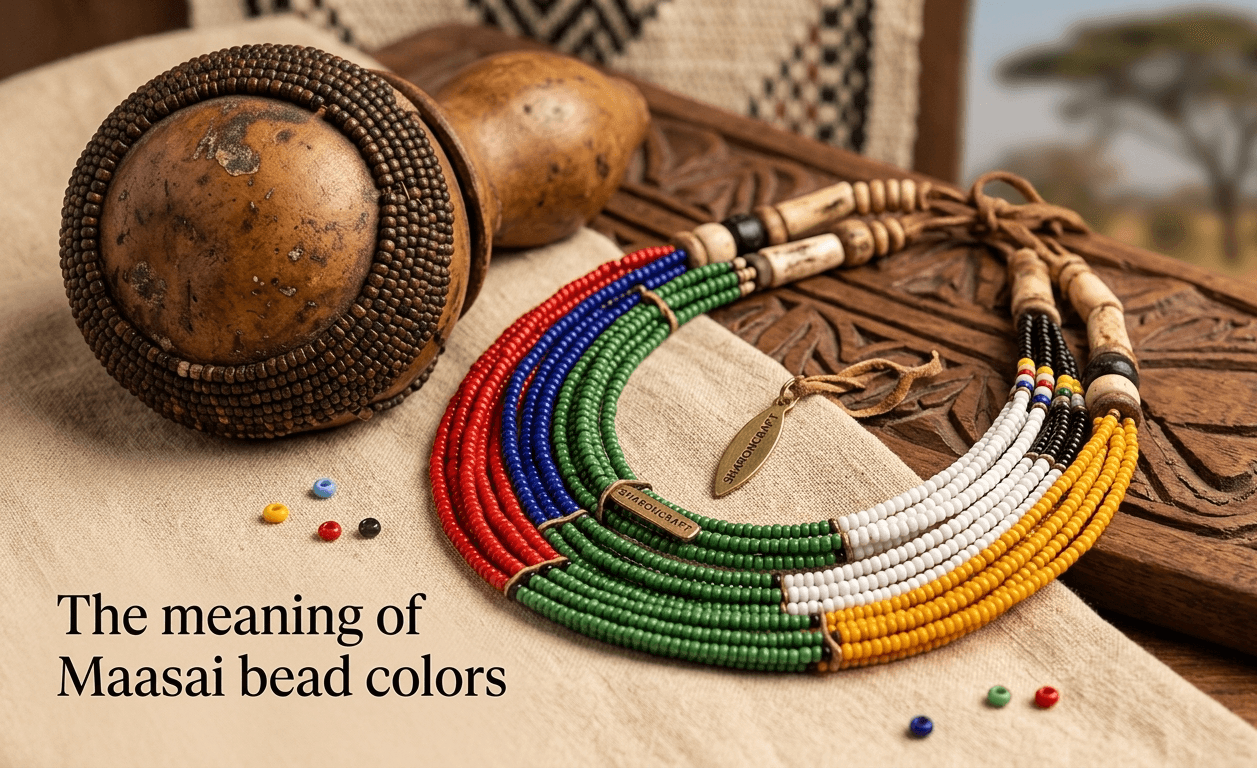
Here is a guide to understanding the cultural symbolism behind the primary colors used in traditional Maasai beadwork.
Red is perhaps the most striking and prominent color in Maasai culture. It represents bravery, strength, and the incredible resilience of the people.
Historically, red is also the color of unity, symbolizing the shared blood and bonds of the community. It serves as a reminder of the challenges overcome together and the collective power of the culture.
Blue represents the sky (Enkai), which provides the life-giving rain for the cattle and the earth.
Because rain is a precious blessing in East Africa, blue has come to symbolize energy, sustenance, and the continuous flow of life. It is a color of hope and prosperity, connecting the wearer to the vastness of the sky above.
Green is deeply tied to the land. It represents the lush pastures, vegetation, and nourishment that sustain life.
In beadwork symbolism, green stands for health, growth, and fertility. It honors the relationship between the community and the natural world, celebrating the balance required to thrive.
Handmade in Nairobi, Kenya
White is a sacred color in Maasai culture. Derived from the color of milk, which provides essential nourishment, white represents purity, health, and peace.
It is often worn during significant spiritual ceremonies and milestones to invite blessings, clarity, and harmony into the community.
Black holds a beautiful dual meaning. First and foremost, it represents the people themselves and the skin that defines their identity.
Secondly, it represents the clouds that bring rain, symbolizing life, protection, and the endurance of the community through all seasons of life.
Yellow and orange are the colors of warmth and hospitality. Yellow reflects the sun, which ripens the crops and illuminates the path ahead, while orange represents the warmth of the home and the spirit of welcoming guests. Together, they symbolize friendship, sharing, and the joy of community life.
"To wear handmade beadwork is to keep a beautiful, ancient language alive in the modern world."
Understanding the stories behind these colors adds a layer of depth to how we appreciate traditional artifacts. When modern jewelry design honors these roots, it bridges the gap between historical reverence and contemporary elegance.
By understanding the language of the beads, you can choose pieces that resonate not just with your personal aesthetic, but with the specific energy, strength, or peace you wish to carry with you.